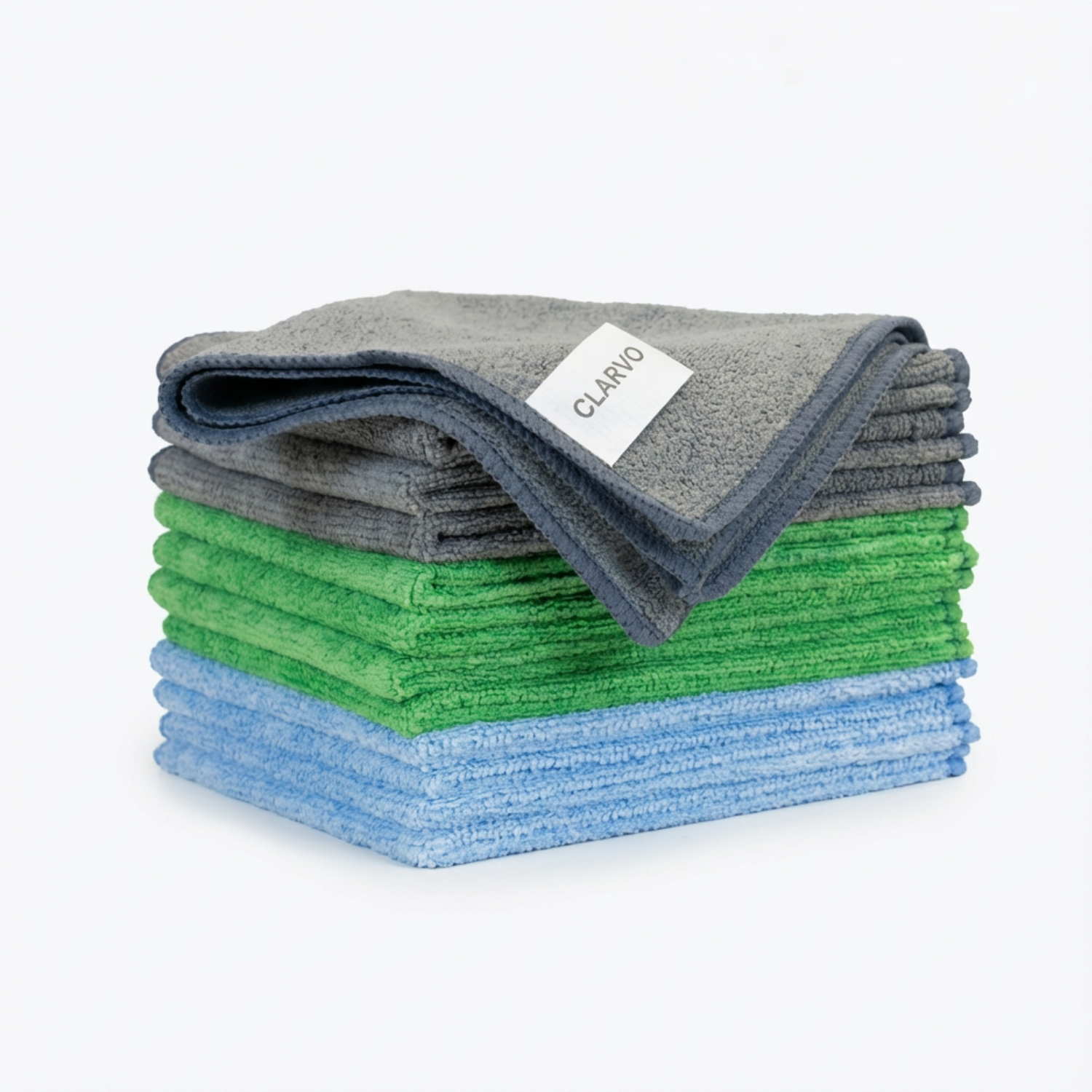
Quality microfiber towels can last for years.
In fact, a well-maintained microfiber towel can survive hundreds of wash cycles while retaining its softness, absorbency and cleaning performance.
So why do some microfiber towels stop working after only a few months?
In most cases, the towel isn’t the problem.
The real issue is how it’s being washed, dried and stored.
Here are five of the most common mistakes that quietly destroy microfiber towels—and how to avoid them.
1. Using Fabric Softener
This is by far the most common microfiber care mistake.
Fabric softener works by coating fibers with a thin layer of lubricating chemicals that make fabrics feel softer.
Unfortunately, that coating also blocks the microscopic channels that give microfiber its absorbency.
After just a few washes with fabric softener, you may notice that your microfiber towels:
- Absorb less water
- Leave streaks behind
- Push liquids around instead of absorbing them
- Feel greasy or slippery
What to Do Instead
Use a standard detergent without added fabric softeners.
If you have hard water, adding a small amount of white vinegar occasionally can help remove mineral buildup and restore absorbency.
2. Washing Microfiber With Cotton Towels
Microfiber acts like a magnet for lint.
Cotton towels, bed sheets and many clothing items constantly shed tiny fibers during washing.
When microfiber is washed alongside cotton fabrics, those fibers become trapped in the microfiber pile.
The result:
- Reduced cleaning performance
- Increased linting
- Streaks on glass and glossy surfaces
What to Do Instead
Wash microfiber separately whenever possible.
If you can’t run a dedicated load, wash microfiber only with other synthetic fabrics that produce minimal lint.
3. Using Excessive Heat in the Dryer
Microfiber towels are made primarily from polyester and polyamide fibers.
These synthetic materials are durable, but they don’t respond well to excessive heat.
High dryer temperatures can:
- Harden the fibers
- Reduce softness
- Damage the split-fiber structure
- Lower absorbency
Over time, excessive heat can permanently reduce performance.
What to Do Instead
Use a low-heat or delicate dryer setting.
Better yet, air-dry your microfiber towels whenever possible.
Most microfiber towels dry surprisingly quickly—often within a few hours.
4. Using Bleach
Bleach is excellent for disinfecting certain fabrics, but it’s harsh on microfiber.
Over time, bleach can weaken the polyamide component of the fibers and make the material brittle.
This often leads to:
- Reduced durability
- Loss of softness
- Premature wear
- Tearing during normal use
What to Do Instead
For heavily soiled towels:
- Wash at 60°C when appropriate
- Use a quality detergent
- Pre-treat grease or oil stains with a small amount of dish soap before washing
This is usually more than enough to restore cleanliness without damaging the fibers.
5. Storing Damp Towels in a Closed Container
Microfiber is highly absorbent.
That’s great for cleaning—but not for storage.
A damp microfiber towel sealed inside a bucket, storage box or bag creates the perfect environment for:
- Mold growth
- Mildew
- Bacteria
- Unpleasant odors
If a towel smells musty when you take it out, it has already begun developing microbial growth and should be washed before use.
What to Do Instead
After use:
- Hang towels openly to dry
- Allow airflow around the fabric
- Wash within 24 hours whenever possible
This simple habit dramatically extends towel life and prevents unpleasant odors.
Bonus Tip: Separate Towels by Task
One of the easiest ways to extend the life of your microfiber collection is to assign specific towels to specific jobs.
For example:
Paint and Drying Towels
Use only on clean paintwork and exterior glass.
Interior Towels
Use for dashboards, trim, leather and screens.
Wheel and Heavy-Duty Towels
Use for wheels, door jambs and dirty areas.
This prevents contamination from transferring between surfaces and helps preserve your best towels for delicate work.
How Long Should a Microfiber Towel Last?
With proper care, a quality microfiber towel can easily last:
- 3–5 years of regular use
- Hundreds of wash cycles
- Thousands of cleaning sessions
Most towels fail prematurely because of improper maintenance—not because the fibers wear out naturally.
Quick Microfiber Care Checklist
✔ Avoid fabric softener
✔ Wash separately from cotton
✔ Use low heat when drying
✔ Never use bleach
✔ Don’t store towels while damp
✔ Separate towels by task
Follow these simple rules, and your microfiber towels will remain soft, absorbent and effective for years.
A quality microfiber towel isn’t a disposable product—it’s a long-term cleaning tool. That’s exactly why many detailing enthusiasts keep a larger supply on hand. With a dedicated set of microfiber towels, it’s easier to separate tasks, avoid cross-contamination and always have a clean towel ready when you need one.