If you’ve ever looked at a drawer full of microfiber towels and wondered whether you really need separate cloths for your car, kitchen and bathroom, you’re not alone.
At first glance, microfiber is just microfiber.
But once you understand how different towels are designed and what they collect during use, it becomes clear why many enthusiasts and professionals keep separate towels for different tasks.
The reason isn’t marketing.
It’s performance, safety and hygiene.
Not All Microfiber Towels Are the Same
The biggest differences between microfiber towels come down to:
- Fabric weight (GSM)
- Fiber length
- Weave construction
- Intended use
A typical all-purpose microfiber towel is around 300 GSM.
These towels are lightweight, versatile and dry quickly, making them ideal for everyday cleaning around the home.
Automotive microfiber towels often use different constructions depending on their purpose.
For example:
Short-Pile Towels
Short, dense fibers work well for:
- Glass cleaning
- Stainless steel
- Kitchen surfaces
- Interior trim
They’re easy to control and leave minimal lint behind.
Medium-Pile Towels
Medium-pile microfiber is commonly used for:
- Dashboard cleaning
- Interior detailing
- Applying interior cleaners
- General-purpose automotive cleaning
These towels balance cleaning ability with flexibility.
Long-Pile and Twisted Loop Towels
Premium automotive drying towels often feature:
- 800–1200 GSM construction
- Long fibers
- Twisted Loop weave
These towels are designed to absorb large amounts of water while remaining safe on delicate paintwork.
A paint-drying towel isn’t necessarily a better kitchen towel.
It’s simply built for a completely different task.
Likewise, a lightweight household microfiber towel may clean a countertop perfectly but struggle to dry an entire vehicle efficiently.
Why Separation Matters More Than the Fabric
The real reason many people separate automotive and household microfiber towels isn’t the towel itself.
It’s what becomes trapped inside the fibers.
Microfiber works because its split fibers create a massive surface area capable of capturing dirt, grease and contaminants.
The downside is that those contaminants often remain embedded in the towel even after use.
Abrasive Particles
When cleaning a vehicle, towels can collect:
- Road dust
- Brake dust
- Sand
- Fine grit
Even after washing, some particles may remain trapped deep within the fibers.
Using that same towel later on household glass, furniture or sensitive surfaces increases the risk of scratches.
Chemical Residue
Automotive cleaning products often contain:
- Wheel cleaners
- Degreasers
- Interior protectants
- Traffic film removers
You probably don’t want traces of those chemicals ending up on kitchen countertops where food is prepared.
Kitchen Grease
The opposite problem also exists.
Kitchen oils, cooking residue and food particles can coat microfiber fibers and reduce their absorbency.
A towel that performs perfectly on a countertop may become far less effective when used later for detailing work.
The Simple Color-Coding System
One of the easiest solutions is assigning colors to specific tasks.
For example:
- Blue = Vehicle exterior
- Gray = Vehicle interior
- Green = Kitchen
- Yellow = Bathroom
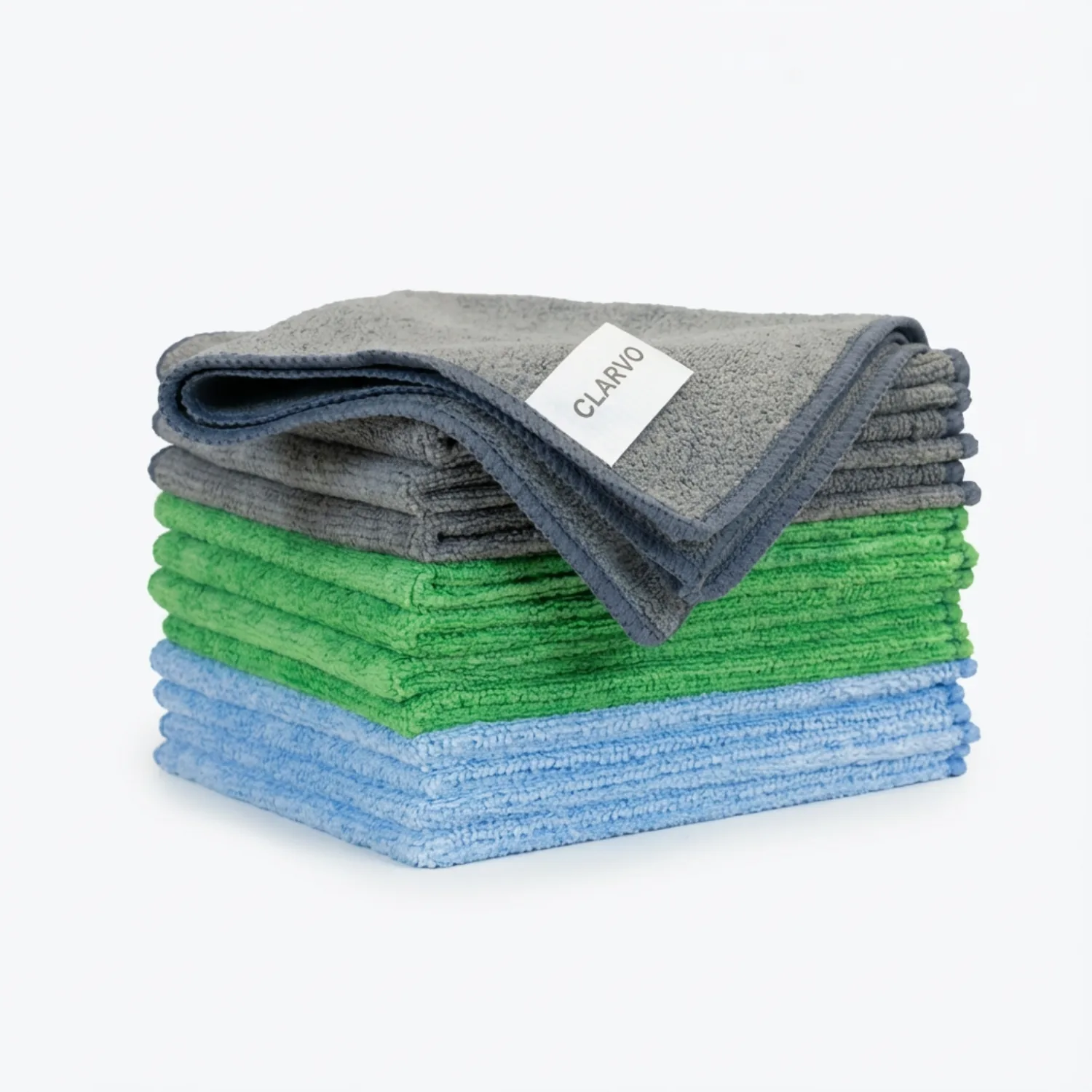
Many microfiber towel packs already include multiple colors, making this system simple to implement.
You don’t need labels or complicated storage systems.
Just stay consistent.
Can the Same Towels Be Used for Both?
In some situations, yes.
A quality 300 GSM microfiber towel is remarkably versatile.
It can be used for:
- Dashboards
- Plastic trim
- Interior glass
- Kitchen surfaces
- Stainless steel
- General household cleaning
The key factor isn’t where the towel is used.
It’s how dirty the task is.
A towel used on wheels, door jambs or heavily contaminated surfaces should never return to paintwork or kitchen duties.
A simple hierarchy works well:
Level 1: Clean Surfaces
Use for:
- Glass
- Screens
- Interior trim
- Freshly washed paint
- Kitchen counters
Level 2: General Cleaning
Use for:
- Dust removal
- Applying cleaners
- Routine maintenance
Level 3: Heavy-Duty Tasks
Use for:
- Wheels
- Engine bays
- Door sills
- Workshop cleaning
Once a towel reaches this category, it should stay there.
Hygiene and Proper Microfiber Care
One of microfiber’s biggest advantages is that it can be reused hundreds of times when cared for correctly.
To maintain performance:
Wash at the Correct Temperature
Most microfiber towels can safely be washed between 40°C and 60°C.
This is sufficient for removing dirt, oils and most common bacteria.
Always follow the manufacturer’s care instructions.
Never Use Fabric Softener
Fabric softener coats the fibers and blocks the tiny channels responsible for absorbing water and dirt.
Over time, microfiber may begin repelling water instead of absorbing it.
Wash Separately From Cotton
Cotton towels shed lint that becomes trapped in microfiber fibers.
For best results:
- Wash microfiber separately from cotton
- Separate automotive and household towels whenever possible
Use Low Heat
Air drying is ideal.
If using a dryer, keep temperatures low to prevent damage to the synthetic fibers.
Pre-Rinse Heavily Soiled Towels
If a towel contains sand, brake dust or heavy dirt, rinse it thoroughly before placing it in the washing machine.
This helps prevent contaminants from spreading to other towels.
A Practical Approach
You don’t necessarily need completely separate collections of towels for your car and your home.
What you do need is a simple system.
A stack of versatile microfiber towels assigned by color and contamination level will handle most household and interior-cleaning tasks with ease.
Then keep one dedicated high-absorbency drying towel exclusively for vehicle paintwork.
That approach delivers better performance, better hygiene and longer towel life.
If you’re building your microfiber collection from scratch, a 12-pack of 300 GSM microfiber towels is an excellent starting point. With enough towels to assign dedicated roles for your vehicle, kitchen, bathroom and glass cleaning, you’ll never be tempted to reuse a questionable towel where it doesn’t belong.